
A computer shouldn’t be a glass rectangle you stare into, or a headset you strap to your face. It should be the room you’re standing in: you say what you want, and it’s there on the wall. This is where Amaze is going next.
Give it a recipe and it knows it’s in a kitchen. It looks around to find the burners, the pan and the bench, and its job is to write the software you need as you go: a rule when you ask for one, the next one when a step is done, and nothing once a rule has done its job.
Nobody wrote this program in advance. It grows out of the recipe and what the camera sees, in a real kitchen with one small projector under a cabinet, and every line is on the wall where you can read it and change it. Read the essay: Grown in Place.

A camera and a projector in the ceiling, and a bare wall. Ask for a bridge and the room writes one, then draws it where you’re looking, with its program written in light beside it so you can read exactly what it made.
Then push on it. Load it until it breaks, ask for a stronger one, slide the weight along. Every answer is a program you can read, and the bridge is really being solved.
No markers, no printed pages, nothing to set up. A vision model looks through the camera and names what it sees: the kettle, the plant, your hand on the bench.
Each thing it sees becomes an object in your world, so you can point at it and talk about it. “Tell me when this boils” is a rule about that kettle, and the rule is written down where you can read it.
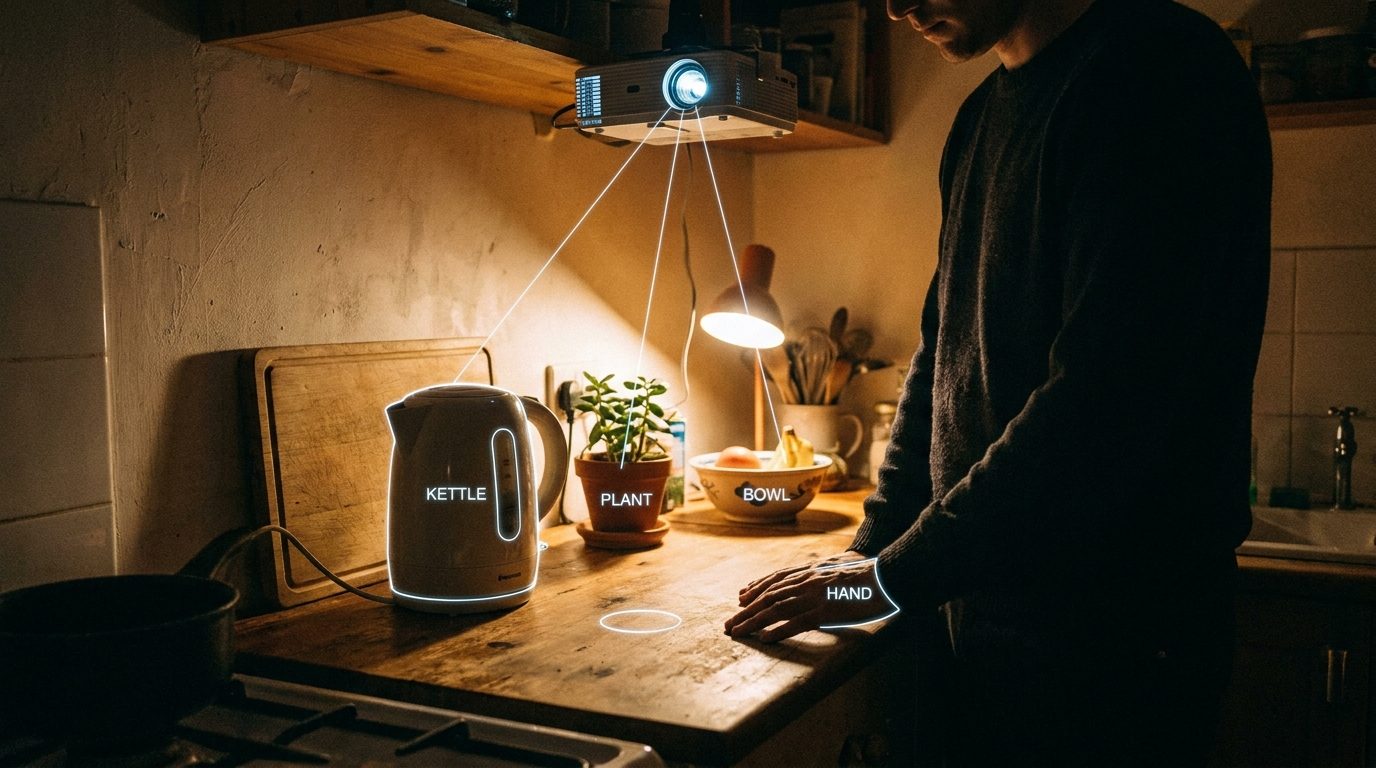
kettle = clone(Seen) (
    looksLike <- "kettle";
    boiling <- steam.rising;
)
reminder = clone(Box) (
    container <- kettle;
    visible <- kettle.boiling;
    shape <- ellipse(0, 0, 60, 60, #FFB866);
)
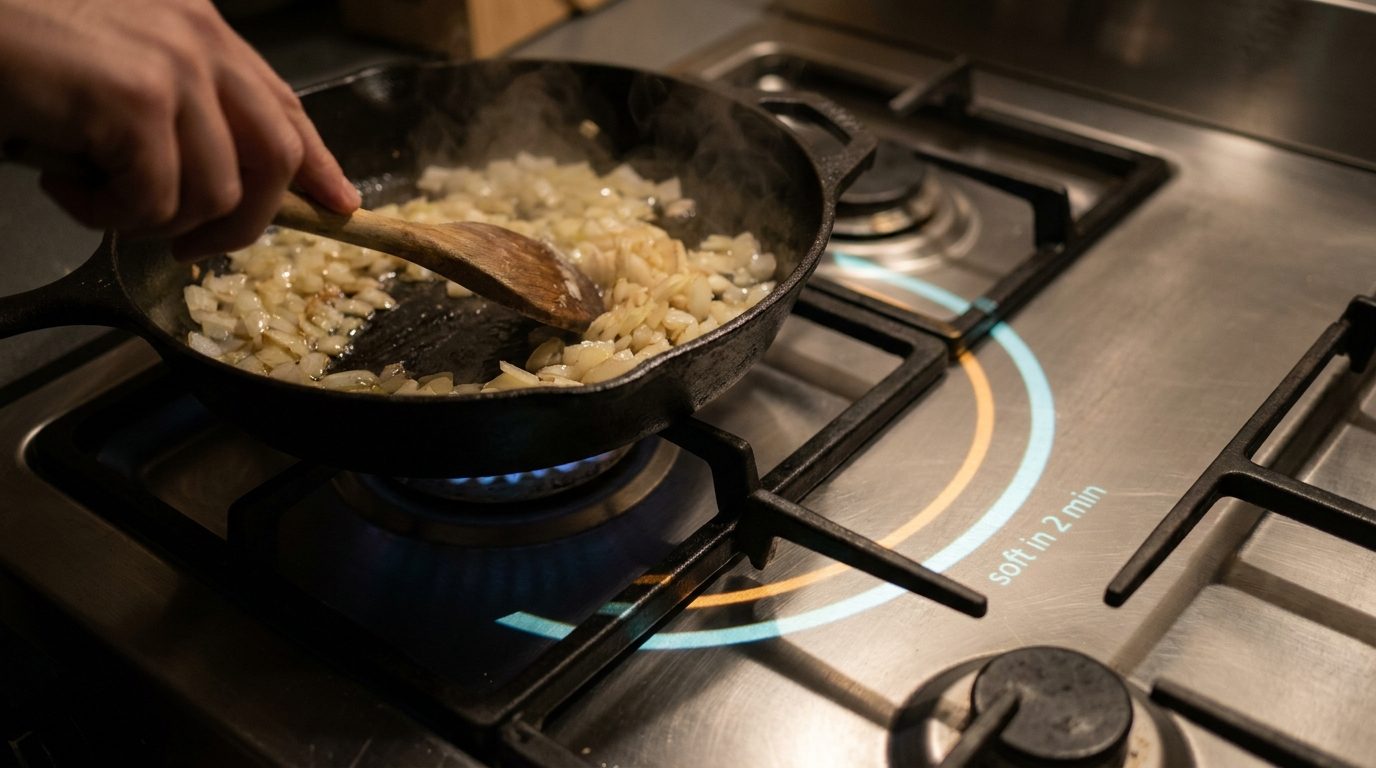
Cooking is the best test. The room watches the bench: it sees the onion turn into a pile of dice, knows the pan is hot, and keeps your place in the recipe without you touching anything. The next step appears on the wall when you’re ready for it.
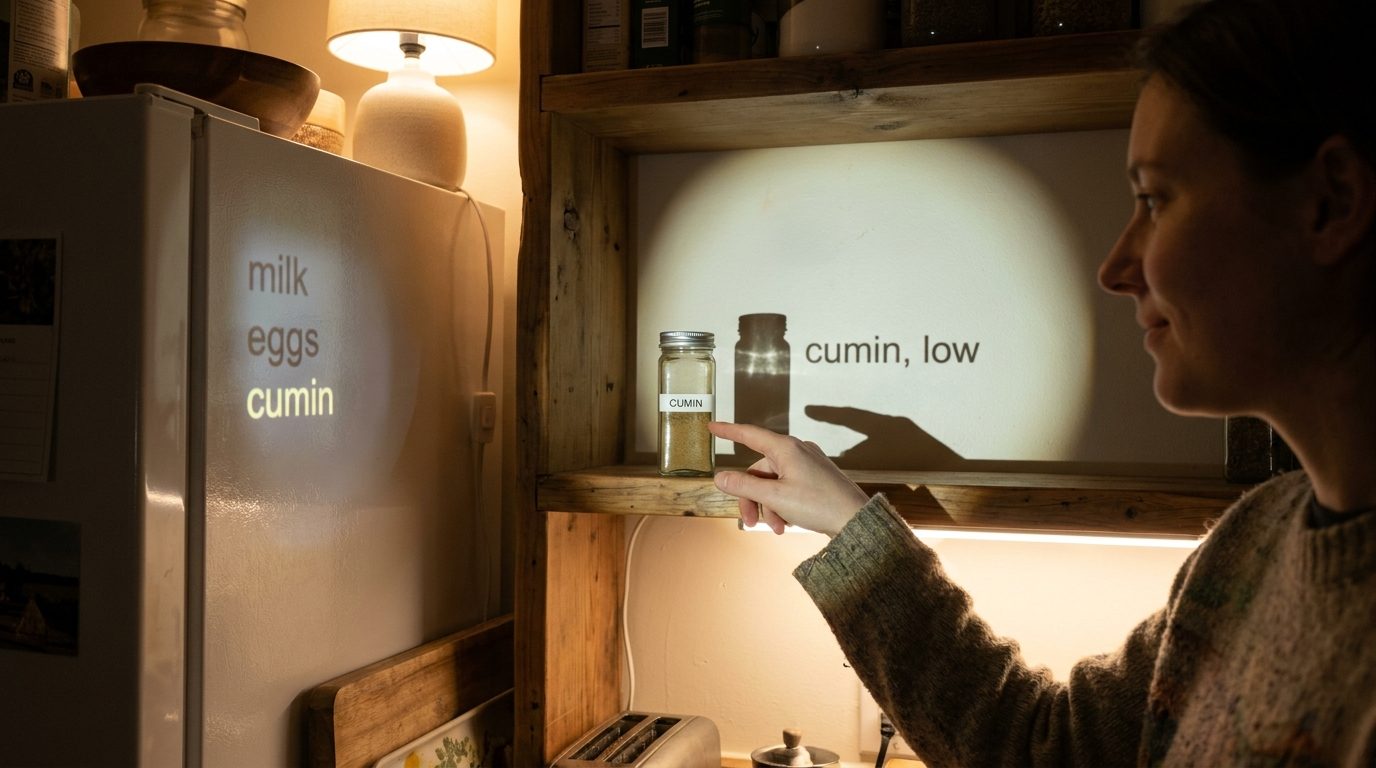
And it’s still your computer. The recipe is a program in your world, written where you can read it, and the onion, the pan and the timer are objects like the lamp and the bridge. Don’t like a rule? Change it: wait for the onions to go darker, warn me before the garlic burns, put cumin on the list when the jar runs low.
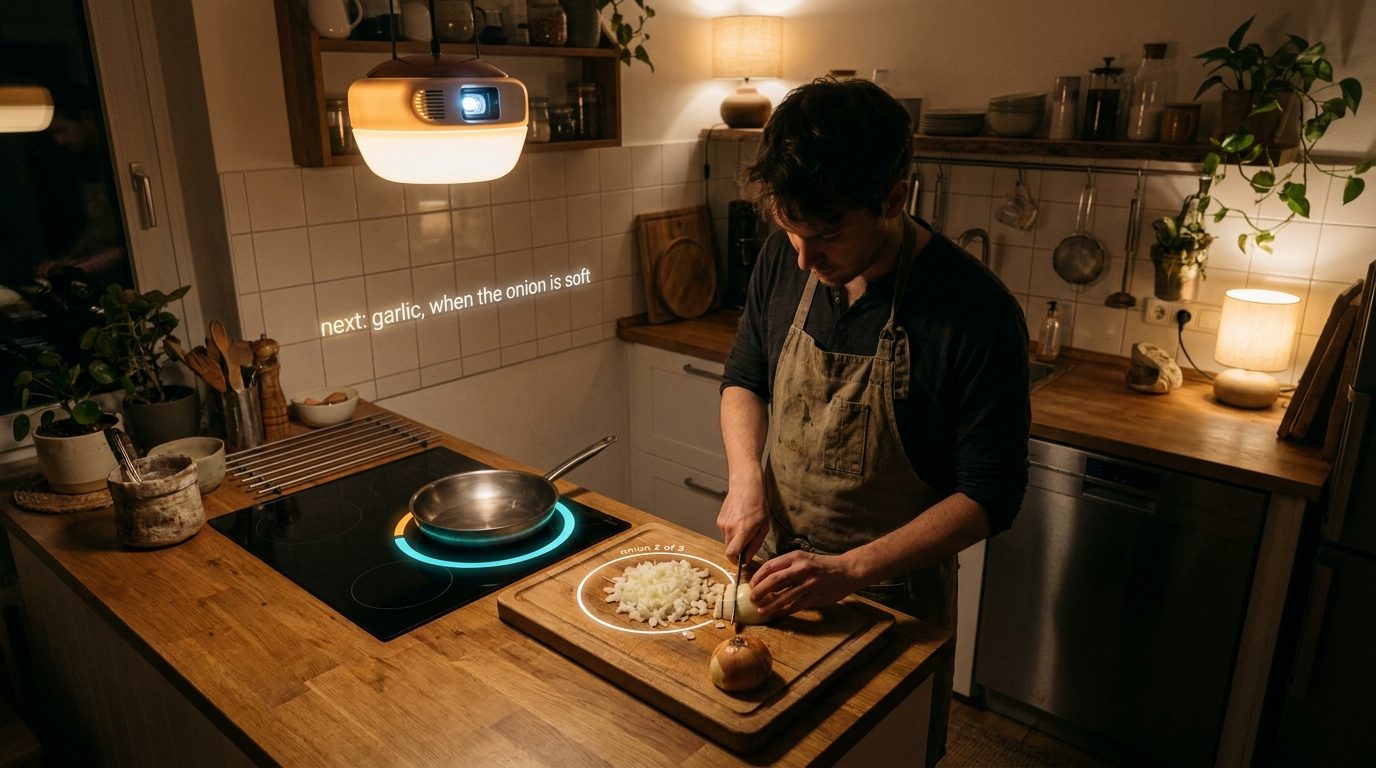
step dice onion until 3 onions
step soften onion in pan until soft
step add garlic when onion is soft
warn if pan is hot and nobody is near
list cumin when the jar is low
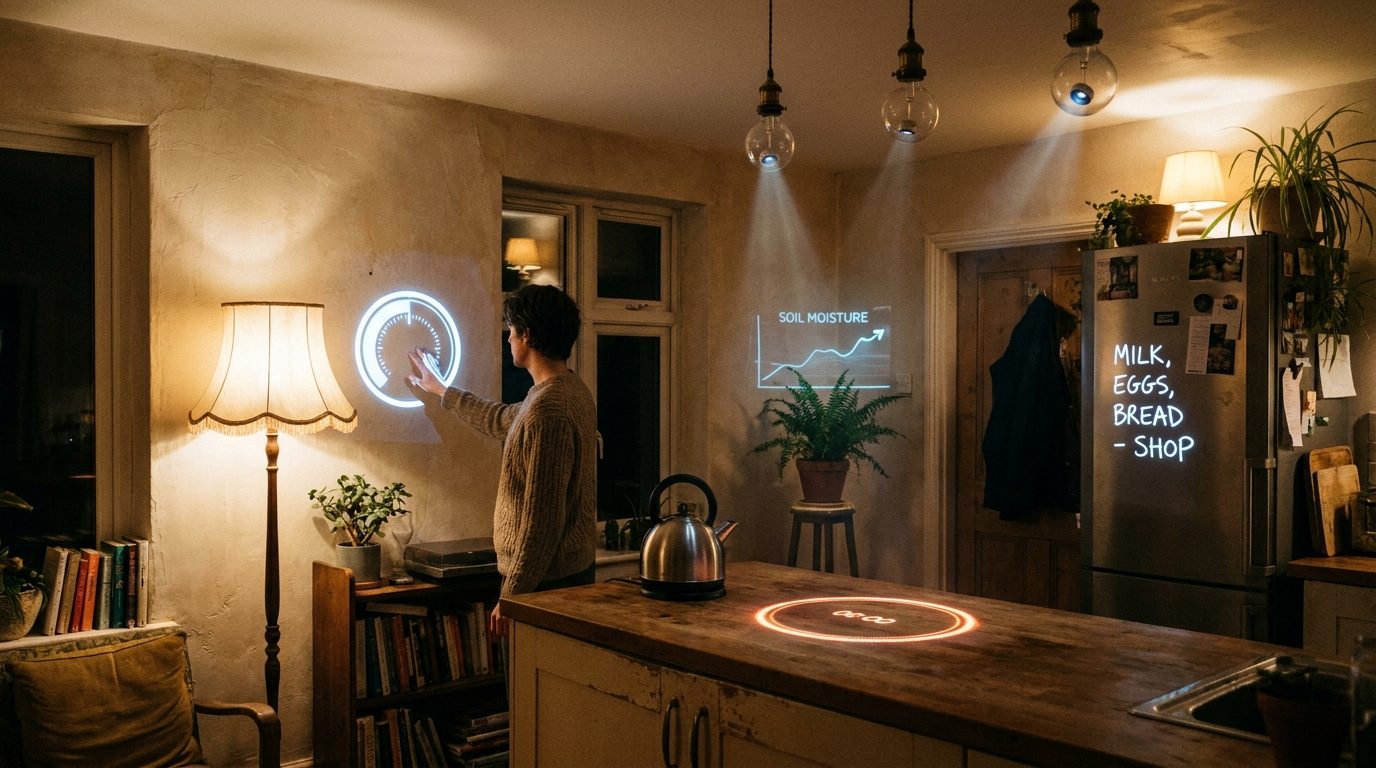
Now make the camera and projector small enough to fit in a light bulb, and screw one into every socket. Every surface under a bulb can see and be drawn on: walls, benches, the fridge door.
There’s no smart-home app that knows about everything. Each thing gets its own interface, right beside it: the lamp has a dial on the wall, the kettle a ring of light on the bench. Each one is an Amaze object with its rules showing, so any of them can be changed to suit the people who live there.
Headsets got one thing right: the computer should be all around you, not in a slab you hold. But a headset shuts out everyone else in the room, and nothing it shows you is still there when you take it off.
A wall is shared by everyone who walks in, asks nothing of your face, and keeps your work exactly where you left it.
Most of the room is parts Amaze already has, pointed outward. The rest is new devices and new grammars, which is what Amaze is built to take on.
Hears what you ask and writes the program: a new language if it needs one, then the thing itself.
Typed chat exists; voice nextWhatever was asked for, in whatever language suits it: truss for bridges, rail for trains, or one made up on the spot.
Exists, truss includedBrings each camera’s frames in, sends the drawing out to its projector, and asks a vision model what’s there, the way the Studio already talks to a model.
Next: a camera driverTalks to the things in the house: lamps, kettles and sensors already speak MQTT or plain HTTP, and each becomes one more grammar.
Next: MQTT as a grammarReads what the vision model answers, the same way it reads the Studio’s replies today: JSON, as a grammar.
The JSON grammar existsEach thing seen becomes an object whose position follows the real thing. Rules bind to it like cells in a spreadsheet.
Objects and bindings existDraws onto walls and benches through the camera-to-projector calibration, a perspective transform.
Flat transforms only, so far